





Larger tires are one of the most popular changes truck owners make, but tire fitment is rarely as simple as choosing a diameter and mounting the tires. The larger the change from the factory setup, the more important suspension clearance, wheel specifications, steering movement, gearing, braking, and intended use become.
If you are planning larger tires on a truck in The Woodlands or Tomball, deciding on the tire first—or at least identifying the target tire size—can help determine which suspension changes are actually necessary.
Do I Need a Lift Kit for Larger Tires?
Not always. Some modest tire-size increases may fit with the factory suspension or a leveling kit, depending on the truck, wheel, tire width, and desired fitment.
Larger increases may require additional suspension height or a full lift system. The key is evaluating clearance through the full range of steering and suspension movement rather than judging fitment while the vehicle is parked.
Leveling Kits and Tire Clearance
A leveling kit raises the front of many trucks and can create additional clearance in the area where larger tires commonly become an issue.
For owners who want a more level stance and only a modest increase in tire size, this can be an effective combination. However, the exact fitment depends on the vehicle and wheel/tire specifications, so a leveling kit should not be treated as a guarantee that any particular tire will fit.
When a Full Lift Makes More Sense
A full lift may be appropriate when the target tire size requires substantially more clearance or when the owner also wants increased ground clearance and a more significant change in vehicle height.
A lift should be selected around the complete build. Suspension geometry, shocks, steering, alignment, wheel offset, and how the truck will be used after the modification all deserve consideration.
Why Wheel Offset Matters
Wheel offset changes where the wheel and tire sit in relation to the hub. Moving the tire outward can help with some clearance concerns while creating others.
A wider stance can change how the tire interacts with the fender or body during steering and suspension compression. Moving the tire inward can create clearance concerns around suspension or steering components.
This is why wheel and tire selection should be planned with the suspension rather than treated as a separate cosmetic decision.
Off-Road Use Changes the Fitment Conversation
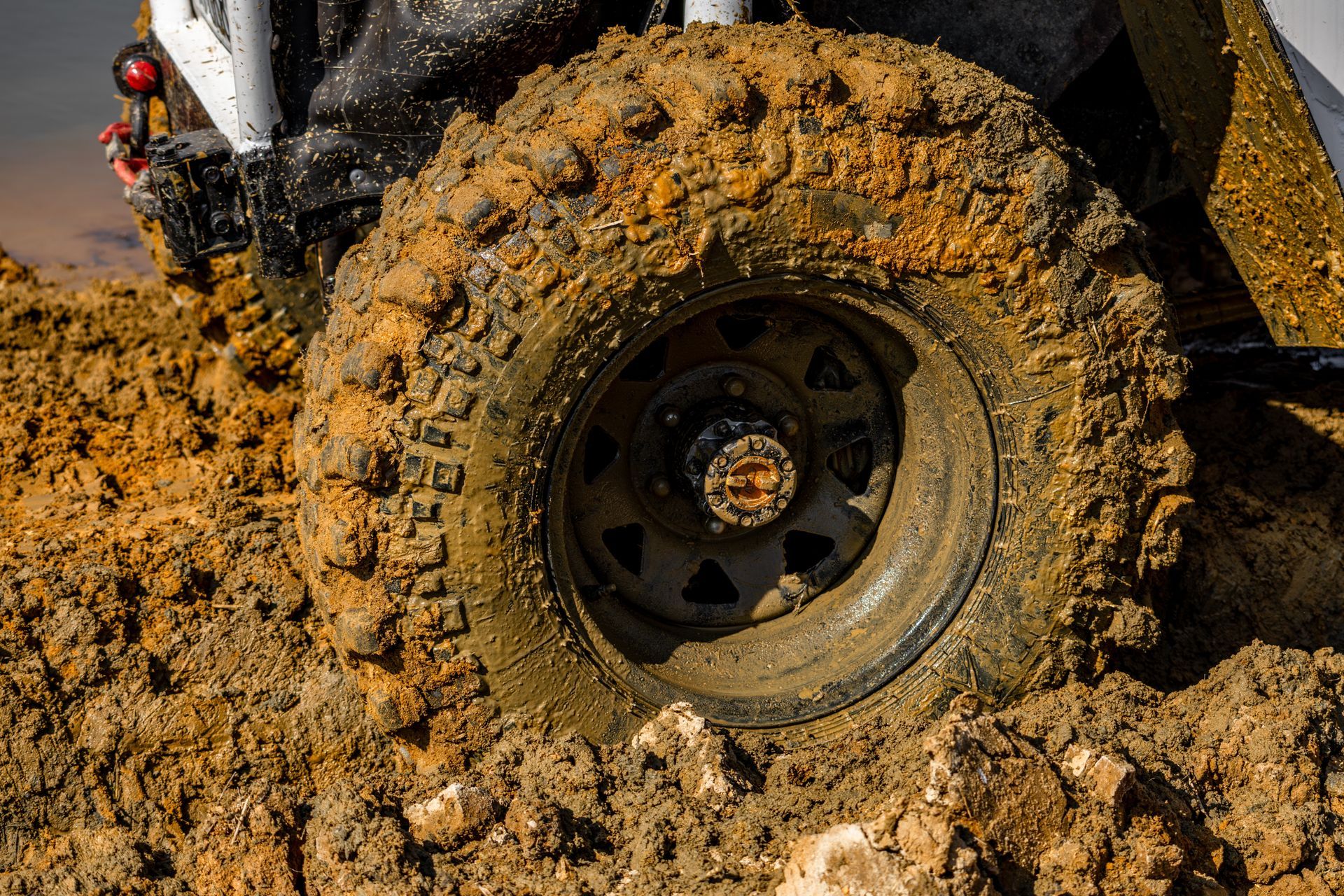
A tire that clears during normal street driving may still contact the body or suspension when the truck is off-road and the suspension is moving through a greater range of travel.
If the vehicle will regularly be used off pavement, fitment should account for articulation, compression, steering angle, and terrain. Off-road suspension systems may also have different goals than a street-oriented lift or leveling setup.
Do Larger Tires Affect Gearing?
Yes, increasing tire diameter changes the effective gear ratio at the ground. A larger tire travels farther with each revolution, which can reduce the mechanical advantage the factory gearing provides.
The result can be slower-feeling acceleration or reduced responsiveness, particularly with a substantial tire-size increase or when the truck is towing or carrying weight.
Byrd Automotive offers gearing and drivetrain upgrades, allowing this issue to be evaluated alongside the suspension and tire package.
Do Larger Tires Affect Braking?
Larger and heavier wheel/tire combinations can change the demands placed on the vehicle during acceleration and braking. The amount of change depends on the specific setup.
For more extensive builds, braking should be considered alongside suspension, gearing, and power. Byrd Automotive also offers performance brake upgrades, which allows the complete vehicle setup to be evaluated rather than focusing only on how the tires fit.
What About Alignment After Suspension Changes?
Whenever suspension height or geometry is changed, alignment becomes an important part of the finished setup.
Poor alignment can contribute to uneven tire wear, steering pull, and undesirable handling. This matters even more when the customer has invested in a new set of larger tires.
The installation should therefore include consideration of the vehicle's final ride height, wheel/tire package, and alignment requirements.
What Suspension Upgrade Should I Choose for 33s, 35s, or Larger Tires?
There is no responsible one-size-fits-all answer based only on tire diameter. A 35-inch tire on one truck can require a different setup than the same nominal tire size on another because factory ride height, wheel-well dimensions, wheel offset, tire width, suspension design, and intended use differ.
Start with the exact year, make, model, trim, wheel specifications, desired tire, and how the truck will be used. From there, Byrd Automotive can help determine whether the build calls for no height change, a leveling kit, a lift kit, or a more complete suspension system.
Larger Tire & Suspension Services Near Tomball and The Woodlands
Byrd Automotive in The Woodlands provides suspension, wheel, tire, and supporting drivetrain services for truck owners throughout The Woodlands, Tomball, Spring, Conroe, and surrounding areas.
Services include lift and leveling kits, Carli Suspension systems, off-road suspension upgrades, shocks, wheels and tires, gearing and drivetrain upgrades, and performance brake upgrades.
Planning these components together helps create a truck that does more than simply fit a larger tire—it helps the complete vehicle work as a coordinated system.
Ready to Plan Your Build?
Talk with Byrd Automotive before ordering your suspension, wheels, or larger tires.